


The main thing to avoid while taking sea moss is a second source of iodine. After that: don't take it in the same hour as thyroid medication, don't add it to a blood-thinner routine without telling your prescriber, and don't take it on an empty stomach if yours is sensitive. That's most of the list. The rest of this article explains why each of those matters and covers a few less obvious ones.
Sea moss is a food, not a drug, and for most healthy adults the only thing it interacts with is the rest of their supplement cabinet. But "it's natural" is not the same as "it combines with everything," and the questions below come up in our inbox every week.
Don't stack iodine sources
This is the one that actually causes problems. Sea moss carries iodine naturally; that's a feature. The adult recommended intake is 150 mcg a day and the tolerable upper limit is 1,100 mcg. A labeled serving of a quality sea moss capsule sits comfortably inside that. Add a kelp capsule, a bladderwrack blend, iodine drops, and a multivitamin with 150 mcg of its own, and you can cross the upper limit without noticing.
Too much iodine over time can push the thyroid in either direction, and the symptoms (fatigue, weight changes, feeling wired or flat) are vague enough that people rarely connect them to their supplements. The fix is simple: pick one iodine-containing product and stick with it. If you take a multivitamin, check the label. If it already has iodine, that's your second source.
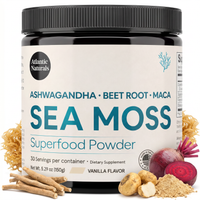
Things that count as iodine sources: kelp, bladderwrack, dulse, nori in quantity, iodized salt in large amounts, iodine drops or tinctures, many prenatal and multivitamins, and other sea moss products. Yes, that last one matters. If you take our capsules and a Sea Moss Hydration stick on the same day, you've doubled up. Add the totals.
Separate it from thyroid medication
If you take levothyroxine or another thyroid medication, two things. First, talk to the prescriber before you start sea moss at all, because your iodine intake is part of how that medication is managed. Second, if you do take both, don't take them together. Thyroid medication is usually taken on an empty stomach, and fiber-rich foods and supplements can affect how much of it gets absorbed. Most pharmacists suggest a gap of at least four hours. Morning medication, sea moss with lunch or dinner.
The same four-hour gap is a reasonable precaution for any medication with a narrow dosing window. When in doubt, ask the pharmacist. It's a thirty-second question.
Tell your prescriber if you're on blood thinners
Sea moss contains some vitamin K, like most leafy and sea vegetables. Vitamin K plays a role in normal clotting, which is why people on warfarin are told to keep their intake steady rather than swinging up and down. That doesn't make sea moss off-limits. It means the prescriber should know you're adding it, so your monitoring stays accurate. If you're on a newer anticoagulant that isn't vitamin K-sensitive, the concern is smaller, but mention it anyway.
Don't take it on an empty stomach if that bothers you
Not a safety issue, a comfort one. Sea moss is mostly soluble fiber and mucilage. For some people, a capsule on an empty stomach first thing in the morning sits heavily or causes mild nausea. Taking it with food and a full glass of water solves it for almost everyone. If you've been doing it on an empty stomach and feeling fine, carry on.
Don't jump to a full dose on day one
Any meaningful increase in fiber comes with an adjustment period. Gas, bloating, softer stools for a week or so. It's the same thing that happens when people suddenly start eating a lot more beans or oats. Start with half the label serving for the first week, then move up. Drink more water than you think you need; soluble fiber absorbs it.
Don't ignore a shellfish allergy
Sea moss isn't shellfish. It's algae, and it doesn't contain shellfish proteins. But a lot of sea moss is harvested, dried, and packed in facilities that also handle shellfish and fish, and cross-contamination is a real risk for anyone with a serious allergy. Read the allergen statement. If it's not there, email the brand. If you have a history of severe reactions, talk to your allergist before trying it.
Don't take it during pregnancy without asking
Iodine needs change during pregnancy and nursing, and so do the limits. Prenatal vitamins usually already include iodine. This is a conversation for your OB or midwife, with the product label in hand, not something to decide from a blog post. We've written more on this in Is Sea Moss Safe During Pregnancy?
Don't buy sea moss nobody tested
This one isn't about what you combine sea moss with. It's about the sea moss itself. Seaweed absorbs heavy metals from the water as readily as it absorbs minerals. Untested sea moss from an unknown origin is the single biggest avoidable risk in this whole category, bigger than any interaction on this page. If a brand can't show you a certificate of analysis for heavy metals, that's the thing to avoid. Our guide to comparing sea moss brands walks through what to ask for.
Things you don't need to worry about
A few questions we get that have an easy answer:
- Coffee. Fine. Have your coffee.
- Other vitamins and minerals. Fine, with the iodine caveat above. Sea moss doesn't block absorption of a normal multivitamin.
- Creatine, protein, electrolytes. Fine. We put sea moss in a creatine drink mix on purpose.
- Alcohol. No known interaction. Sea moss won't fix a hangover, though.
- Taking it at night. Fine. There's no time of day it works better. Consistency is what counts.
At a glance
| Avoid | Why | What to do instead |
|---|---|---|
| Other iodine supplements | Easy to exceed the 1,100 mcg daily upper limit | One iodine source only; check your multivitamin |
| Taking it with thyroid medication | Fiber can affect absorption; iodine affects management | Ask the prescriber; separate by 4+ hours |
| Starting on blood thinners without a word | Vitamin K content matters for warfarin monitoring | Tell the prescriber; keep intake steady |
| Empty stomach (if sensitive) | Mucilage can cause mild nausea | Take with food and water |
| Full dose on day one | Fiber adjustment | Half serving for a week, then full |
| Ignoring shellfish allergy | Facility cross-contamination | Read allergen statement; ask the brand |
| Untested product | Heavy-metal risk | Ask for a certificate of analysis |
Frequently asked questions
What should you not take with sea moss?
Other iodine supplements such as kelp or bladderwrack, and iodine-containing multivitamins, unless you've added up the totals. Thyroid medication and blood thinners aren't automatically off-limits but need a conversation with the prescriber and, for thyroid medication, a gap of several hours.
Can I take sea moss with my thyroid medication?
Only after talking to the prescriber, since iodine intake is part of how thyroid medication is managed. If you do take both, separate them by at least four hours.
Can you take sea moss with coffee?
Yes. There's no interaction between sea moss and coffee.
Should sea moss be taken with food?
It doesn't have to be, but taking it with food and a glass of water is more comfortable for people who find it heavy on an empty stomach.
Can I take sea moss capsules and sea moss gel on the same day?
You can, but add the amounts together. Two sea moss products on the same day means twice the iodine, so keep the combined total inside a normal daily serving.
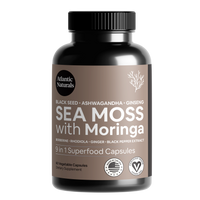
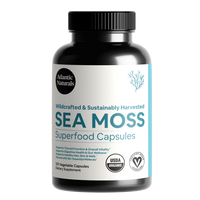
For the full list of side effects and who should check with a doctor first, read Sea Moss Side Effects: What to Know Before You Start. For dosing by format, see How Much Sea Moss Per Day?, and for everything else, our main guide: Sea Moss Capsules: What They Do, Whether They Work, and How to Take Them. Every batch of our Organic Sea Moss Capsules is third-party tested, and the serving is a measured 1,000 mg so you always know what you're taking.
This article is for informational purposes only and is not medical advice. These statements have not been evaluated by the Food and Drug Administration. These products are not intended to diagnose, treat, cure, or prevent any disease.


Leave a Comment