


Recovery isn't complicated, but it is easy to half-do. Five things actually move the needle after a workout: rehydrating with real electrolytes, eating enough protein (including something for your connective tissue, not just muscle), sleeping enough, managing inflammation sensibly instead of just popping ibuprofen, and actually resting on the days you're supposed to rest. Most people nail one or two of these and wonder why they're still beat up. Here's the checklist, in order.
1. Rehydrate with actual electrolytes, not just water
Sweat isn't just water leaving your body. It's water plus sodium, potassium, and other electrolytes, and if you only replace the water part, you're not fully replacing what you lost. This is the step people think they've handled because they drank a lot of water at the gym. Drinking water is good. It's not the same thing.
This is where Sea Moss Hydration earns its keep. Each stick pack (9.64g) has Pink Himalayan salt (300mg sodium, 13% DV), magnesium citrate (100mg, 24% DV), potassium citrate (300mg, 6% DV), 1,000mg coconut water powder, and 250mg trace minerals from 800mg of wildcrafted Irish sea moss, plus 3,000mg of creatine monohydrate, which is really its own recovery category. Compare that to something like LMNT or Liquid I.V.: solid electrolyte formulas, but neither has creatine, and neither has the trace mineral contribution from sea moss. Different tool.
The mistake here isn't skipping hydration entirely. It's treating plain water as if it covers the job.
2. Eat enough protein, including something for connective tissue
Muscle protein synthesis gets all the attention, and it should. Protein intake after training matters, and most people who lift seriously already know that. What gets skipped is the connective tissue side: tendons and ligaments, which take real mechanical stress during training and don't repair on the same timeline muscle does.
Collagen peptides are where the evidence points for that specific gap. Collagen is a structural protein, and hydrolyzed collagen peptides give your body more of the raw material tendons and ligaments are built from. It's not a replacement for whole-food protein. It's an addition aimed at a part of the body regular protein intake doesn't specifically target.
Peptide Recovery Complex combines hydrolyzed collagen peptides and targeted amino acids with MSM, turmeric extract standardized to 95% curcuminoids, black pepper extract for absorption, and zinc. It's built around the joint and connective tissue side of recovery specifically, which is the piece most protein shakes don't touch. MSM in particular gets studied for joint comfort more than for muscle repair, a different lane than collagen but a related one; both point at the tissue around the muscle rather than the muscle fibers themselves.
None of this means you can skip a normal protein target and just take collagen instead. Collagen peptides are a low-leucine protein source, meaning they're not a great primary driver of muscle protein synthesis on their own. Treat them as an addition to your regular protein intake, not a substitute for it.
3. Sleep enough. This one isn't negotiable.
Here's the honest part: no supplement outruns bad sleep. You can nail hydration, protein, and inflammation management perfectly and still recover poorly if you're consistently short on sleep. Sleep is when a huge amount of tissue repair and hormonal recovery actually happens. It's not a nice-to-have layered on top of the "real" recovery work. It's a big part of the real recovery work.
We can't sell you a pill for this one, and we wouldn't pretend to. If sleep is the weak link in your routine, fixing that will likely do more for how you feel than any product on this list. That's just how it works.
4. Manage inflammation sensibly, not aggressively
Some inflammation after training is normal. It's part of how tissue adapts and rebuilds. The goal isn't to shut it down completely; it's to keep it from getting in the way of your next session. Reaching for maximum-dose ibuprofen after every workout as a default habit isn't the sensible version of this, especially used that routinely.
Turmeric, specifically the curcuminoid compounds in it, is one of the more studied natural options here, though curcumin on its own absorbs poorly, which is why it's usually paired with black pepper extract (piperine) to improve uptake. That combination is part of why Peptide Recovery Complex includes both turmeric extract standardized to 95% curcuminoids and black pepper extract together, rather than turmeric alone.
This step is easy to overdo in the opposite direction, too. Some people avoid anything that touches inflammation because they've heard it's "necessary" for gains. It is, to a point. But chronic, poorly managed inflammation isn't the same thing as the normal short-term response to a hard session, and treating every twinge as untouchable isn't more virtuous. It's just uncomfortable.
5. Actually rest on rest days
This is the step that gets skipped because it doesn't feel like doing anything. Rest days exist because adaptation happens during recovery, not during the workout itself. Training breaks tissue down; rest and recovery are what rebuild it stronger. Skip the rest consistently and you're accumulating fatigue faster than you're adapting to it.
"Rest" doesn't have to mean total inactivity. Light movement, walking, easy mobility work are all fine. What it does mean is not treating every day like a training day, and not feeling guilty about the days that aren't.
Does creatine belong in a recovery routine or just a performance one?
Both, honestly. Creatine is best known for strength and power output, but it also plays a role in cellular energy availability more broadly, which is relevant to recovery, not just lifting numbers. It's one of the most studied supplements in existence, with over 200 human trials behind it and daily amounts commonly studied in the 3,000-5,000mg range. That's part of why we built it into Sea Moss Hydration rather than treating hydration and performance as separate categories.
Putting the checklist together
You don't need to overhaul your whole routine at once. Most people are already doing one or two of these well, usually protein, sometimes sleep if they're lucky. The gaps tend to cluster around hydration depth (water without electrolytes), connective tissue (all muscle, no joints), and actual rest days that aren't secretly light cardio days in disguise.
A reasonable version of this looks like: electrolytes after training, protein spread through the day with a collagen peptide addition for joints, a consistent bedtime, inflammation support that's proportionate rather than maximal, and rest days you actually take. It's not glamorous. It's also most of what works.
Recovery factors at a glance
| Recovery factor | What actually moves the needle | Common mistake |
|---|---|---|
| Hydration | Replacing electrolytes (sodium, potassium, magnesium), not just water | Drinking plain water and assuming it covers everything sweat took out |
| Protein / connective tissue | Adequate total protein plus collagen peptides for tendons and ligaments | Focusing only on muscle protein, ignoring joints and connective tissue |
| Sleep | Consistent, sufficient sleep, the single biggest lever | Treating sleep as optional or "make up for it later" |
| Inflammation | Sensible management (nutrition-based support, moderate use of anti-inflammatories) | Defaulting to maximum-dose NSAIDs after every session |
| Rest days | Actual lower-intensity days that let adaptation happen | Training through fatigue and calling it discipline |
FAQ
What's the single most important recovery factor?
Sleep, by most accounts. It's the one factor where a shortfall isn't really fixable with a supplement or a better shake. Everything else on this list works better when sleep is solid and works worse when it isn't.
Do I need electrolytes if I'm already drinking a lot of water?
If you're sweating meaningfully, plain water alone doesn't replace sodium and potassium losses. That's the gap electrolyte products like Sea Moss Hydration are built to close.
Is collagen a replacement for whey or other protein powder?
No. Collagen peptides are aimed specifically at connective tissue, tendons and ligaments, rather than muscle protein synthesis broadly. Most people benefit from both, not one instead of the other.
Should I take anti-inflammatories after every workout?
Some post-training inflammation is a normal part of adaptation, so managing it sensibly rather than suppressing it aggressively and routinely is generally the more measured approach. Nutrition-based support, like turmeric with black pepper for absorption, is one option worth considering alongside occasional, not constant, NSAID use.
How many rest days do I actually need?
It depends on training volume and intensity, which varies enough person to person that there's no single number that fits everyone. The practical marker is simple: are you recovering faster than you're accumulating fatigue? If not, you need more rest, not more discipline.
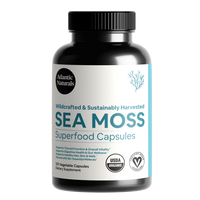
For more on the individual pieces here, see our guides on why sea moss and creatine work together and what peptides are, in plain English. You can find the full lineup, including Organic Sea Moss Capsules, in our sea moss collection.
These statements have not been evaluated by the Food and Drug Administration. This product is not intended to diagnose, treat, cure, or prevent any disease.


Leave a Comment