

You scoop it into your coffee, or you see the word stamped across a jar at the gym, and nobody ever quite explains it. Peptides. Is that just protein with a fancier name? And why does the same word show up on a supplement label and in a headline about injections your doctor has to approve?
Fair questions. This guide answers them in plain language: what peptides are, how they relate to the protein you already eat, the real line between the powder-in-a-scoop kind and the prescription kind, and where collagen peptides fit if you are an active adult thinking about recovery. No hype. Just the actual picture.
What are peptides, exactly?
A peptide is a short chain of amino acids. Amino acids are the building blocks that link up to form every protein in your body, including the collagen in your skin, your tendons, and your connective tissue. Join a few amino acids together and you have a peptide. Keep going, link a lot of them, and you have a full protein.
So the difference between a peptide and a protein is mostly length. Short chain, peptide. Long chain, protein. Your body is constantly building these up and breaking them down as part of ordinary maintenance, whether you take a supplement or not.
None of this is exotic. Peptides occur naturally in food and in your own tissue. The ones in a decent oral supplement usually come from a natural protein source that has been broken down, or "hydrolyzed," into shorter chains before it ever reaches your kitchen counter.
How peptides differ from whole protein: the absorption angle
Here is the part that actually makes peptides interesting. Whole proteins are big molecules. Your digestive system has to chop them down into smaller fragments and individual amino acids before your body can put them to use. That takes time and effort.
Peptides have a head start. They are already cut into shorter chains, so they tend to be easier to break down and absorb than intact protein. That is the whole idea behind hydrolyzed collagen peptides. The collagen has been enzymatically snipped into smaller pieces that dissolve in liquid and digest readily. In practice, that is also why a good peptide powder stirs cleanly into coffee or a smoothie instead of clumping into something chalky.
Absorption efficiency is a structure-and-function point, not a promise about any specific result. But it does explain why so many people like peptides as a format when they want a convenient way to get some extra amino-acid building blocks into the day.
Oral peptide supplements versus prescription injectable peptides
If you take one thing from this article, take this. Two very different things share the word "peptide," and the supplement world has a bad habit of blurring the two. They are not interchangeable, and it matters.
Oral peptide and collagen-peptide supplements are foods and dietary supplements. You take them by mouth, usually as a powder or a capsule, and they deliver amino-acid building blocks the same way any protein-containing food does. This is what Atlantic Naturals sells, including our Peptide Recovery Complex. These products are meant to support the body's normal structure and function as part of a healthy diet. That is the lane.
Prescription injectable peptides live in a completely different world. They are pharmaceutical compounds, given by injection, evaluated as drugs, and, where they are legitimate, prescribed and supervised by a licensed clinician. You have probably seen the internet chatter about various injectable "research peptides." Those are not dietary supplements. They are not what we sell. Nothing here is a comment on them one way or the other.
Let us be blunt, because vagueness here is exactly how people get misled. An oral collagen-peptide supplement is not a substitute for injectable peptide therapy, not an equivalent to it, and not some over-the-counter shortcut to the same effect. Anyone implying that a powder does what a prescription drug does is making a claim you should not trust. A reputable oral supplement supports your diet with amino-acid building blocks. It does not treat injuries, cure conditions, or perform medical functions. If the prescription category is on your mind, that belongs in a conversation with a qualified healthcare provider, not a label.
Collagen peptides and recovery
Back in the oral supplement lane, collagen peptides are one of the most studied and widely used options. Collagen is the most abundant protein in your body and a major structural piece of tendons, ligaments, cartilage, skin, and other connective tissue. Collagen peptides are just that collagen, hydrolyzed into the shorter, more digestible chains we talked about earlier.
So why do active adults reach for them? The reasoning is pretty grounded. The connective tissue that collagen builds carries a lot of load, from training and lifting all the way down to walking, standing, and moving through a normal day. Feeding those tissues the amino-acid building blocks they are made from is a way to support your body's own maintenance and structure. And collagen peptides bring protein along with them, which supports post-exercise recovery as part of a balanced diet.
Notice how careful the words are here. Support. Building blocks. Structure and function. That is on purpose. Connective-tissue support and post-exercise recovery are legitimate things to discuss, but a supplement does not heal an injury or treat a medical condition. Joint pain, an actual injury, something that keeps nagging at you? That is for a healthcare professional. Not a scoop of powder.
Who oral peptides tend to suit
Broadly, oral peptide and collagen-peptide supplements are aimed at active adults who want a simple way to support recovery and connective-tissue maintenance alongside a solid diet and a real training habit. People who lift. People who run. People who do yoga, or just stay active and want to feel a little more supported day to day.
There is an age angle too, and it is worth knowing. Your body's own collagen production gradually tapers off as you get older, with many sources putting the start of that decline somewhere around the late twenties to early thirties. That is not something going wrong. It is just aging. But it does explain why a lot of people in their 30s and up start paying attention to their collagen intake through diet and supplements. If that is you, and you want a format that fits into an ordinary morning, an oral peptide supplement is a reasonable thing to add.
And the usual caveat, which is not just boilerplate: if you are pregnant, nursing, managing a health condition, or taking medication, talk to your healthcare provider before you start anything new.
How to take oral peptides, and why consistency matters
The how is refreshingly boring. Most collagen-peptide and oral peptide supplements are made to be taken once a day. Powders go into water, coffee, tea, or a smoothie. Capsules go down with a glass of water. There is no magic hour on the clock, so the best time is honestly whichever one you will actually remember.
Plenty of active people take their serving around a workout or as part of the morning routine, mostly because bolting it onto a habit they already have makes it stick. Follow the serving size on the label, too. More is not better here.
Consistency is the real lever. Supporting your body's structure and maintenance is gradual and cumulative, not a switch you flip once. A serving you take reliably every day for weeks and months does far more than an occasional big dose you remember every so often. Park it next to the coffee maker. Keep a container in your gym bag. Stack it onto something you already do without thinking, so it becomes automatic.
What to look for in a quality peptide supplement
Supplements are not held to one standard, and the gap between a trustworthy product and a vague one usually comes down to a few things you can check on the label.
- Dose transparency. A good label tells you exactly how much of each ingredient is in a serving. Be wary of "proprietary blends" that bury the individual amounts inside one lump total. If you cannot see what you are getting, that is the point.
- Third-party testing. Independent lab testing confirms that what is on the label is what is in the jar, and screens for contaminants. It is one of the clearest signs a brand takes quality seriously.
- Made in the USA under real manufacturing standards. Facilities that follow Good Manufacturing Practices offer more accountability around how a product is sourced and produced.
- Honest labeling. Look for structure and function language, not dramatic disease or injury claims. Overpromising is a red flag, not a feature.
We built our Peptide Recovery Complex around exactly these principles, with dosing you can read and quality you can verify.
Pairing peptides with minerals and hydration
Peptides do not do their thing in a vacuum, and neither does your body. Recovery and normal tissue maintenance also lean on staying well hydrated and getting a decent spread of minerals through your diet.
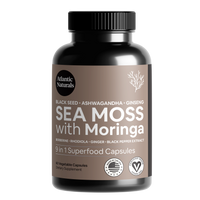
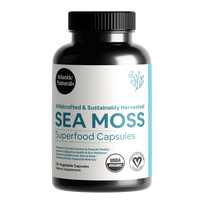
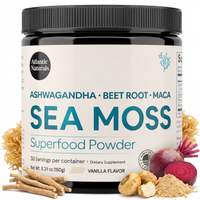
This is where sea moss earns its spot. It is a nutrient-dense sea vegetable that naturally carries a range of trace minerals, which is a big part of why it has become a fixture in so many wellness routines. Put a protein-focused peptide supplement next to a mineral-focused one and you get a more well-rounded daily foundation than either gives you alone.
If hydration is the priority, our Sea Moss Hydration blend was designed to sit cleanly alongside a recovery routine. You can also browse the full sea moss collection to find the format that suits your day. Peptides for the building blocks, sea moss for minerals and hydration. Simple, complementary, and easy to keep up with if you are an active adult trying to support how you feel and function.
Peptides are short chains of amino acids, the same building blocks your body already uses to build and maintain its tissue. Oral peptide and collagen-peptide supplements are a convenient, easily digested way to add more of those building blocks to your diet, which is why they are so popular with active adults and with people in their 30s and beyond who want to support recovery and connective-tissue maintenance. They are also a completely separate category from prescription injectable peptides, and it is worth staying clear-eyed about that. Pick a transparently dosed, third-party-tested product, take it consistently, pair it with good hydration and minerals, and treat it as one supportive piece of an overall healthy routine.
Frequently Asked Questions
Are peptides the same as protein?
Not quite. Peptides are short chains of amino acids, while proteins are much longer chains of the same building blocks. Because peptides are already broken into shorter pieces, they are generally easier to digest and absorb than whole proteins.
Is an oral peptide supplement the same as injectable peptide therapy?
No. Oral peptide and collagen-peptide supplements are dietary supplements you take by mouth to provide amino-acid building blocks. Prescription injectable peptides are a separate pharmaceutical category administered under medical supervision. They are not interchangeable, and an oral supplement is not a substitute for medical treatment.
When is the best time to take collagen peptides?
There is no required time of day. Most people take their serving once daily whenever it is easiest to remember, such as with morning coffee or around a workout. Consistency day to day matters more than the exact timing.
Who should consider an oral peptide supplement?
They are generally aimed at active adults who want a convenient way to support recovery and connective-tissue maintenance alongside a good diet. Interest often grows from the 30s onward, since the body's natural collagen production gradually declines with age. If you are pregnant, nursing, or managing a health condition, talk to your healthcare provider first.
Can I take peptides and sea moss together?
Yes. They are complementary: peptides supply amino-acid building blocks, while sea moss provides a range of naturally occurring trace minerals and can support hydration. Many people use them together as part of a well-rounded daily routine.
These statements have not been evaluated by the Food and Drug Administration. This product is not intended to diagnose, treat, cure, or prevent any disease.


Leave a Comment