
Pick up two bags of sea moss and you'll likely see the same two words on both: wildcrafted and organic. Brands use them side by side, sometimes as if they mean the same thing. They don't. One describes where the seaweed came from. The other describes how its sourcing and handling were checked. They answer different questions, which is exactly why so many labels blur them together.
So let's take them apart. What each word actually means, why the quality line that matters most isn't wildcrafted versus organic at all, how the water a plant grows in shapes what's inside it, and what to look for before you spend money, on our products or anyone else's.
What "Wildcrafted" Sea Moss Actually Means
Wildcrafted sea moss is gathered by hand from the ocean, off rocky coastlines and tidal zones where it grows on its own, clinging to rock and fed by the currents. Nobody planted it. Nobody fertilized it or raised it in a tank. Harvesters cut it in season, from living beds, the same way coastal families in Ireland and the Caribbean have done for generations.
Why does growing wild in moving seawater matter? Because sea moss (Chondrus crispus and cousins like Gracilaria) has no roots pulling nutrients up from soil. It drinks straight from the water around it. Depth, temperature, current, the minerals dissolved in that water, that's the plant's entire diet. Wildcrafted moss develops in the full mess and complexity of the open ocean instead of a tidy artificial pool.
The honest part: "wildcrafted" isn't a regulated word
Here's the thing most sea moss brands would rather not spell out. No government agency defines "wildcrafted" on a supplement label. There's no certification behind it, no inspection, no penalty for using it loosely. A company can print "wildcrafted" on a bag of tank-grown moss and, short of someone challenging it as false advertising, walk away fine.
That doesn't make the word worthless. Used honestly, it points to a genuinely different product. But used alone, it proves nothing. The proof has to come from somewhere else: a named source and third-party lab testing. Which is where the whole conversation eventually lands, and where the checklist further down comes in.
What USDA Organic Certification Means for Sea Moss
USDA Organic is the opposite kind of claim. It's a federal program with written standards, accredited certifiers, and inspections that repeat every year. When a product carries the seal, an independent agent has confirmed the operation follows the National Organic Program, and confirmed it again the next year, and the year after that.
What the certification actually covers
People get stuck on a fair question: how can a wild ocean plant be "organic" if nobody grows it? The answer is that the National Organic Program writes standards specifically for wild crops. Under those rules, hand-harvested sea moss can be certified organic when a few conditions are met. The harvest area has to be designated and documented, and free of prohibited substances for a set period before anyone cuts anything. Harvesting has to be sustainable, meaning it can't tear up the environment or exhaust the bed; harvesters cut and leave the beds able to grow back. And everything after the harvest, the washing, drying, milling, encapsulating, has to follow organic handling rules, with full traceability from the shoreline to the finished bottle.
Read that back and you'll notice organic certification for sea moss is barely about "how it was grown." The ocean handles growing. It's about verified sourcing, clean harvest areas, sustainable practice, and disciplined handling the rest of the way. It takes a brand's promises and hands them to a third party to check.
What it doesn't cover
One thing worth being blunt about: the seal is not a nutrient guarantee, and on its own it is not a heavy-metal test. Seaweed absorbs whatever sits in its water, the good minerals and, sometimes, the ones you'd rather avoid. Requiring clean, documented harvest areas cuts that risk meaningfully. It doesn't erase it. That's why serious brands still run independent lab testing on every batch. Certification and testing work together. Neither replaces the other.
Pool-Grown vs. Ocean-Grown: The Line That Actually Matters
Now the part of this that deserves more attention than the label debate ever gets. A large share of the sea moss sold online never touched the ocean.
Pool-grown moss (tank-grown, same idea) is raised in artificial pools of salted water. It grows fast, it's cheap to make at scale, and it photographs beautifully. But the only minerals in that water are the ones the operator poured in, usually salt and not much else. The plant never meets the broad spectrum of dissolved minerals and trace elements in real seawater, because it's never in real seawater.
Ocean-grown moss is the alternative. Wildcrafted from natural beds, or rope-grown out in open water, it matures in the actual marine environment, worked over by currents and tides, soaking up the full mineral profile of the sea.
How to spot pool-grown sea moss
No single clue is proof. But pool-grown moss tends to give itself away, and usually in more than one of these ways at once:
- Uniform, plump, pale strands. Pool-grown moss often looks eerily consistent: thick, rubbery, light gold or nearly white, every piece a twin of the last. Wild moss is irregular, varied in thickness and color, with thinner branching.
- A heavy coating of fine salt. Tank operations lean on table-salt brines that can leave a dense, powdery white crust. Ocean-harvested moss carries natural sea salt, and sometimes a little sand or a fleck of shell, proof it came from a real ocean.
- Almost no smell. Real ocean-grown moss has a mild, clean sea scent. Pool-grown moss often smells like nothing, or just like salt.
- No named origin. If a listing won't say where the moss was harvested, country, coast, region, assume there's a reason it won't.
- A price that's too good. Hand-cutting wild seaweed off coastal beds is slow, physical work. "Wildcrafted" moss going for almost nothing usually isn't.
Why the Habitat Shapes What's Inside
People buy sea moss largely for its minerals. But that mineral content isn't baked into the plant. It's borrowed. Seaweed pulls minerals and trace elements straight out of the water column, across its whole surface. So the mineral profile of any given batch is, more than anything, a portrait of the water it grew in.
Natural seawater carries a wide range of dissolved minerals. Wild moss spends its entire life bathed in that. A tank of municipal water with salt stirred in can't come close, so whatever grows in it develops against a much thinner backdrop.
The same honesty runs the other direction, though. Mineral content shifts with species, season, water conditions, and harvest location, even among ocean-grown moss. Any brand quoting one fixed figure, like the "92 minerals" line that gets copied all over the internet, is passing along folklore, not batch data. The trustworthy answer is habitat plus proof: ocean-grown sourcing first, then a lab analysis of what's actually in the finished product.
Can Sea Moss Be Both Wildcrafted and Organic?
Yes. And this is the point where the two labels stop competing and start reinforcing each other. Because the National Organic Program covers wild crops, moss hand-harvested from natural ocean beds can also be certified organic, as long as the harvest areas, methods, and downstream handling meet the standards and clear inspection.
A product wearing both credentials is telling you two separate things. That the seaweed grew wild in its natural habitat. And that an accredited third party has checked the sourcing, the sustainable harvest, and the clean handling from shoreline to capsule. The unregulated claim gets vouched for by the regulated one.
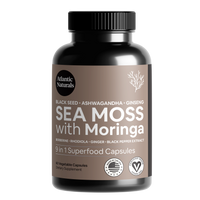
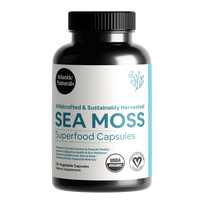
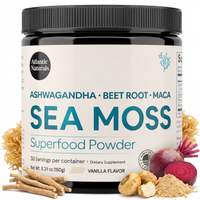
That's the approach we take at Atlantic Naturals. Our products are USDA Organic, and several, including our Organic Vegan Sea Moss Capsules, are made with wildcrafted Irish sea moss harvested from its natural ocean environment. The wildcrafted sourcing is a quality choice. The organic certification is how we prove the rest of the chain holds together.
A Buyer's Checklist for Sea Moss
Whatever brand you're weighing, run it through five checks. A named harvest source comes first: the brand should tell you where its moss comes from, a country and coastline at the very least, because "sourced from the ocean" answers nothing. Next, look for a clear ocean-grown confirmation, wildcrafted from natural beds or open-ocean grown, stated outright; if a listing tiptoes around the pool-grown question, ask it directly. Then third-party lab testing, which, given that "wildcrafted" is unregulated, is the real equalizer; a credible brand tests finished batches at an independent lab and says so plainly. Heavy-metal screening matters for the same reason absorbency helps and hurts, so batch-level screening for lead, arsenic, cadmium, and mercury isn't optional for anything that came out of the sea. And finally, meaningful certification: a USDA Organic seal means an accredited certifier has verified sourcing and handling on an annual basis, which is the difference between a claim and an audit.
Clear all five and the wildcrafted-versus-organic question mostly answers itself, because what you're holding is transparent, ocean-grown, verified moss. You can see how our own products measure up against that list across our full sea moss collection, from capsules to Sea Moss Hydration drink mixes.
So Which One Should You Care About?
Both, really, because they're not rivals. Wildcrafted tells you the moss grew in its natural ocean habitat, which sets the mineral environment it developed in. USDA Organic tells you an independent certifier has verified the harvest areas, the methods, and the handling behind the finished product. Only one of those words is regulated, so the strongest products pair them: wild, ocean-grown sourcing, backed by real certification and batch-level testing. That's the bar worth shopping for. It's the one we hold ourselves to.
Frequently Asked Questions
Is wildcrafted sea moss better than organic sea moss?
They're not opposites, so neither is automatically "better." Wildcrafted describes ocean-grown origin; organic certification verifies sourcing and handling. The strongest option is sea moss that is both — wild-harvested from natural ocean beds and certified organic under USDA wild-crop standards, with third-party lab results to back it up.
Is "wildcrafted" a regulated term?
No. Unlike USDA Organic, "wildcrafted" has no legal definition, no certifying body, and no inspection requirement on supplement labels. Any brand can use the word. That's why source transparency and independent lab testing are the real tests of a wildcrafted claim.
How can wild sea moss be certified organic if nobody grows it?
The USDA National Organic Program includes standards for wild crops. Wild-harvested sea moss can be certified organic when the harvest area is documented and free of prohibited substances, harvesting is sustainable and non-destructive, and all post-harvest handling follows organic rules — all verified by an accredited certifier.
What's wrong with pool-grown sea moss?
Pool-grown sea moss is cultivated in artificial tanks of salted water rather than the ocean. Because sea moss absorbs minerals from the water around it, tank water offers a far narrower mineral environment than living seawater. Pool-grown moss is typically identifiable by its uniform pale strands, heavy fine-salt coating, faint smell, low price, and unnamed origin.
Does organic certification mean the sea moss is tested for heavy metals?
Not by itself. Organic certification verifies clean, documented harvest areas and compliant handling, which reduces risk, but it is not a substitute for lab analysis. Look for brands that additionally screen every batch for heavy metals through an independent third-party laboratory.
These statements have not been evaluated by the Food and Drug Administration. These products are not intended to diagnose, treat, cure, or prevent any disease.


Leave a Comment