


Last updated: May 2026
(Based on data from USDA FoodData Central and National Institutes of Health)
Sea moss (also known as Chondrus crispus or Irish moss) has become one of the most talked-about superfoods in the U.S. But what minerals are actually in sea moss—and are the popular claims accurate?
This guide breaks down the sea moss mineral content, based on U.S. nutrition data and current research, so you can understand what it actually offers.
Sea Moss Minerals List (Quick Answer)
Sea moss contains key minerals including iodine, calcium, magnesium, potassium, iron, zinc, selenium, and phosphorus. These minerals support thyroid function, bone health, energy production, and immune health.
However, sea moss provides moderate—not complete—amounts, making it a supportive addition to a balanced diet.
In short: Sea moss provides a variety of essential minerals, but in moderate amounts—making it a useful supplement, not a replacement for a balanced diet.
What Is Sea Moss?
Sea moss is a type of red seaweed that grows along the Atlantic coasts of North America and Europe. It naturally absorbs minerals directly from seawater, which is why it contains a wide range of nutrients.
You may also come across the term Irish moss, if you’re unsure, read our simple guide explaining whether Irish moss is the same as sea moss.
Minerals vs Vitamins: What’s the Difference?
Before diving deeper, it is better to understand the basics:
- Minerals are inorganic elements absorbed from water or soil
- Vitamins are organic compounds made by plants or animals
Both are essential for:
- Energy production
- Immune support
- Muscle and nerve function
Sea moss provides both vitamins and minerals together, making it nutrient-dense.
Read our detailed guide: What vitamins are in sea moss and how they support your health.
Sea Moss Mineral Content (Complete Breakdown)
Sea moss contains a range of essential minerals. Here’s a simplified breakdown of the most important ones:
Iodine
Supports thyroid function, cognitive health, and metabolism
Calcium
Helps maintain strong bones and teeth, support muscle function, and plays an important role in blood clotting process
Magnesium
Supports muscle function, nervous system, and bone health
Potassium
Helps regulate fluid balance and heart function
Iron
Supports oxygen transport, energy levels, cognitive function, and immune system
Zinc
Supports immune health and skin repair
Selenium
Acts as an antioxidant and supports thyroid function
Phosphorus
Supports bone strength and energy production
Sodium
Helps regulate hydration and nerve signaling
Copper & Manganese
Support metabolism and enzyme function
Minerals present in the sea moss contribute to many of the health benefits of sea moss, including thyroid function and immune support, skin health, and energy production.
Mineral Content in Sea Moss (Per 10g Serving)
According to USDA Food Data Central, a typical 10 g serving (2 tablespoons) of sea moss may provide approximately:
- Calcium: 7.2 mg
- Iron: 0.89 mg
- Magnesium: 14.4 mg
- Phosphorus: 15.7 mg
- Potassium: 6.3 mg
- Sodium: 6.7 mg
- Zinc: 0.195 mg
- Copper: 0.015 mg
- Manganese: 0.037 mg
- Selenium: 0.07 µg
(Values vary depending on source and quality.)
The United States Department of Agriculture does NOT list iodine values for sea moss specifically.
Iodine in sea moss is highly variable, not fixed.
According to reliable medical sources, sea moss contains about 4–7 µg iodine per gram → roughly 40–70 µg per 10g
Why Is Sea Moss Rich in Minerals?
Unlike land plants, sea moss absorbs nutrients directly from seawater across its surface.
This means:
- It naturally contains a wide spectrum of minerals
- Its nutrient profile reflects the environment it grows in
Cleaner waters = better mineral quality.
Does Sea Moss Contain 92 Minerals?
This is one of the most common claims—but it’s often misunderstood.
What’s true:
- Sea moss can contain many trace elements
What’s misleading:
- Not all sea moss contains exactly 92 minerals
- Not all minerals are essential for the body
- Many are present only in trace amounts
In reality, sea moss consistently provides a core group of essential minerals, while others vary depending on the environment.
What Is the Most Important Mineral in Sea Moss?
Iodine is considered the most important mineral in sea moss.
Why it matters:
- Supports thyroid hormone production
- Regulates metabolism and energy
According to the National Institutes of Health, iodine is an essential component of the thyroid hormones. However, too much iodine in the body can also be harmful.
Is Sea Moss High in Iodine?
Yes, sea moss is naturally iodine-rich.
This can be beneficial for:
- People with low iodine intake
According to the National Institutes of Health (NIH):
- Recommended intake: 150 mcg/day
- Upper limit: 1,100 mcg/day
Too much iodine may lead to:
- Thyroid dysfunction
- Hormonal imbalance
- Goiter (enlarged thyroid gland)
Moderation is key, especially if you consume other iodine-rich foods.
Sea Moss vs Other Mineral Sources
Here’s how sea moss compares:
- Sea moss: Broad range of minerals, natural source
- Supplements: High doses, targeted nutrients
- Whole foods: Balanced and reliable nutrition
Best approach: Use sea moss as a nutritional booster, not a replacement.
Key Health Benefits Linked to Sea Moss Minerals
Because of its mineral content, sea moss may support:
Thyroid Function
From iodine and selenium
Bone Health
From calcium, magnesium, and phosphorus
Energy Levels
From iron and magnesium
Immune Support
From zinc and antioxidants
Muscle and Nerve Function
From potassium and magnesium
Is Sea Moss a Good Source of Minerals?
Sea moss can support your nutrition—but it’s not a complete solution.
What it does well:
- Provides a variety of minerals naturally
- Supports overall nutrient intake
- Complements a healthy diet
What it doesn’t do:
- Replace whole foods
- Provide all minerals in high amounts
- Act as a full multivitamin
Does Sea Moss Contain Trace Minerals?
Yes, sea moss may contain additional trace elements such as:
- Chromium
- Silicon
- Nickel
- Boron
However, these are usually present in very small amounts and are not always nutritionally significant.
Is Sea Moss Safe to Take Daily?
Sea moss is generally safe when used in moderation.
Important considerations:
- High iodine content → avoid excessive intake
- Quality matters → choose tested sources
You may also read our detailed guide: Is it safe to take sea moss daily?
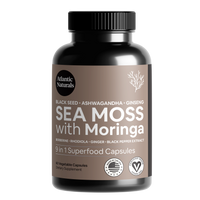
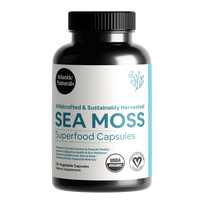
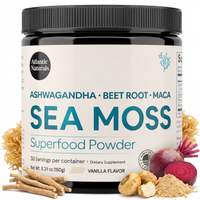
Discover Atlantic Naturals’ premium selection of organic Irish sea moss supplements, proudly made in the USA, third-party tested, and sourced from high-quality wildcrafted or organic sea moss—free from unnecessary fillers and artificial additives.
Key Takeaway
Sea moss contains a wide range of essential minerals, including iodine, magnesium, calcium, potassium, and iron.
However, the amounts are generally moderate, and the exact profile varies depending on where it’s grown.
When sourced properly and used in moderation, sea moss can be a simple, natural way to support your mineral intake—but it should not replace a balanced diet.
Disclaimer
This article is for informational purposes only and does not constitute medical advice.


Leave a Comment