

Last updated: April 2026
Sea moss (also called Chondrus crispus or Irish moss) has earned a reputation as a “mineral-rich superfood.” But what vitamins does it actually contain, and are the popular claims accurate?
Read our detailed guide on whether sea moss is truly a superfood.
Let’s break down what vitamins are actually in sea moss, based on current nutritional data, and what that means for your health.
Sea Moss Vitamins List (Quick Answer)
Sea moss contains vitamins such as vitamin C, A, E, K, and several B vitamins (B1, B2, B3, B5, B6, and folate). It does not provide significant amounts of vitamin B12 or vitamin D, making it a supportive—not complete—vitamin source.
Minerals vs Vitamins: What’s the Difference?
Before diving deeper, it helps to understand the basics.
- Vitamins are organic compounds made by plants or animals
- Minerals are inorganic elements absorbed from soil or water
Both are essential for:
- Energy production
- Immune support
- Cellular function
- Overall health
Sea moss stands out because it provides both vitamins and minerals together, making it a nutrient-dense addition to your diet.
Sea Moss Vitamins List and Their Benefits
According to data from the U.S. Department of Agriculture, sea moss contains the following vitamins (amounts may vary depending on quality and source):
|
Vitamin |
Role in the Body |
|
Vitamin C |
Supports immune health and skin repair |
|
Vitamin A |
Helps vision, skin, and immune function |
|
Vitamin E |
Acts as an antioxidant |
|
Vitamin K |
Supports blood clotting and bone health |
|
Vitamin B1 (Thiamin) |
Helps convert food into energy |
|
Vitamin B2 (Riboflavin) |
Supports energy and cell function |
|
Vitamin B3 (Niacin) |
Aids metabolism and skin health |
|
Vitamin B5 (Pantothenic Acid) |
Supports hormone and energy production |
|
Vitamin B6 |
Supports brain function and metabolism |
|
Vitamin B9 (Folate) |
Important for cell growth and pregnancy |
|
Choline |
Supports brain and liver function |
|
Beta-carotene |
Converted into vitamin A in the body |
These vitamins are present in moderate to small amounts, but together they contribute to overall nutritional support.
They contribute to many of the health benefits of sea moss, including immune support, skin health, and energy production.
Vitamin Content in Sea Moss (Per 100g Serving)
According to data from the U.S. Department of Agriculture, here’s the detailed sea moss nutrition facts for vitamins per 100g:
(100g is not a typical serving—most people consume around 5–10g per day.)
- Vitamin C: 3 mg
- Vitamin A: 118 IU
- Vitamin E: 0.87 mg
- Vitamin K: 5 µg
- Vitamin B6: 0.069 mg
- Vitamin B1 (Thiamin): 0.015 mg
- Vitamin B3 (Niacin): 0.593 mg
- Vitamin B2 (Riboflavin): 0.466 mg
- Vitamin B9 (Folate): 182 µg
- Vitamin B5 (Pantothenic Acid): 0.176 mg
- Choline: 12.9 mg
- Beta-carotene: 71 µg
Sea moss does not provide meaningful amounts of vitamin B12 or vitamin D, based on available nutrition data.
This information is based on publicly available nutrition data and current dietary research.
Keep in mind: Vitamin levels can vary depending on where and how the sea moss is grown.
Does Sea Moss Contain All Essential Vitamins?
Sea moss contains a broad range of essential vitamins, but not always in high amounts.
It works best as:
- A nutrient booster
- A supporting addition to a balanced diet
The exact vitamin content can vary depending on:
- Ocean conditions
- Harvesting method (wildcrafted vs. cultivated)
- Processing and storage
Does Sea Moss Have Vitamin B12?
This is one of the most common questions—and one of the biggest misconceptions.
Sea moss only contains trace amounts of vitamin B12.
That means:
- It is not a reliable B12 source
- It should not replace B12 supplements, especially for those on plant-based diets
Are There Fat-Soluble Vitamins in Sea Moss?
Yes, sea moss contains:
- Vitamin A
- Vitamin E
- Vitamin K
These are fat-soluble vitamins, meaning your body absorbs them better when consumed with healthy fats.
Is Sea Moss a Good Source of Vitamins?
Sea moss can support your nutrition—but it’s not a complete solution.
What it does well:
- Provides a variety of vitamins naturally
- Supports overall nutrient intake
- Complements a healthy diet
What it doesn’t do:
- Replace whole foods like fruits and vegetables
- Provide high doses of all essential vitamins
- Act as a complete multivitamin
You may also come across the term Irish moss—if you’re unsure, here’s our simple guide explaining whether Irish moss is the same as sea moss.
Does Sea Moss Contain Minerals Too?
Yes, sea moss does contain minerals, and this is actually where it stands out most.
It naturally provides minerals like iodine, magnesium, calcium, potassium, zinc, and iron, often in higher amounts than its vitamins.
However, the exact levels can vary depending on how and where it’s grown. While sea moss can support your nutrient intake, it shouldn’t be relied on as your main source of minerals.
Read our detailed guide: What minerals are in sea moss and how they support your health.
Who Can Benefit from Sea Moss Vitamins?
Sea moss may be helpful for:
- People with low nutrient intake
- Those following a plant-based diet
- Individuals looking for a natural source of vitamins and minerals
If you’re considering adding it to your routine, it’s also important to understand whether it’s safe to take sea moss daily, especially due to its iodine content.
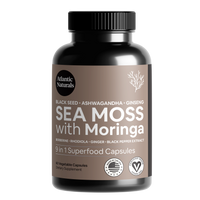
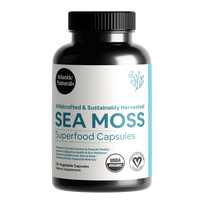
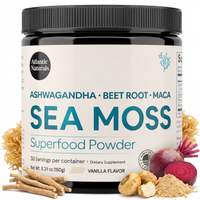
Explore Atlantic Naturals’ premium range of organic Irish sea moss supplements, made in the USA, third-party tested, and sourced from high-quality wildcrafted or organic sea moss—without unnecessary fillers or artificial additives.
Key Takeaway
Sea moss contains a wide range of vitamins, including vitamin C, A, E, K, and several B vitamins.
However, the amounts are generally moderate, so it’s best used as a nutritional supplement—not a replacement for a balanced diet.
When sourced properly and used in moderation, sea moss can be a simple way to support your overall nutrient intake naturally.
Disclaimer: This article is for general informational purposes only and does not contain medical advice.


Leave a Comment