
If a sea moss brand can't show you a heavy-metal test for the batch you're holding, don't buy it. That's the whole article in one sentence. Sea moss grows in seawater and absorbs what's in it, which is why it's mineral-rich and also why it can carry arsenic, lead, cadmium, and mercury if the water or the handling was dirty. The only way to know what's in a given batch is to test that batch. We publish ours, by lot number, on our Third Party Lab Results page. Below is how to read a report like that, from any brand, so you can tell the difference between a real test and a sticker that says "lab tested."
Why seaweed is a special case
Most supplement ingredients are grown in soil or synthesized in a facility. Seaweed is grown in the ocean, and seaweed is a sponge. The same biology that lets sea moss pull iodine, magnesium, and potassium out of seawater lets it pull in whatever else is dissolved there. Near a shipping lane or an industrial outfall, that includes metals. Sea moss raised in tanks has a different problem: whatever's in the tank water and the fertilizer ends up in the plant.
None of that makes sea moss dangerous. It makes untested sea moss a question mark. The product is only as clean as the water it came from and the lab that checked it.
The four metals that matter
Every serious supplement test covers the same four, often called the "big four" after the USP standard that sets their limits:
- Lead. The one regulators care about most, because there's no safe level and it accumulates. California's Prop 65 sets its warning threshold at 0.5 micrograms a day, which is the number most careful brands aim under.
- Arsenic. Seaweed is known for picking up arsenic, so this is the one to look at hardest on a sea moss report. Inorganic arsenic is the form that matters; some reports distinguish it from the less harmful organic form, some report total.
- Cadmium. Accumulates in the kidneys over years. Seaweed and shellfish are common dietary sources.
- Mercury. Less of an issue for seaweed than for fish, but it's on every panel.
The reference limits most U.S. labs use come from USP General Chapter 232, which sets a daily exposure ceiling for each metal from oral supplements: 5 mcg for lead, 15 mcg for inorganic arsenic, 5 mcg for cadmium, 30 mcg for mercury. Prop 65 is stricter on lead. A good report either states the limit it's measuring against or reports results low enough that it doesn't matter.
How to read a certificate of analysis
A certificate of analysis, or COA, is the lab's report on one specific batch. Here's what to look for, in order:
- A lot or batch number that matches the one printed on your bottle. A COA without a lot number is a COA for nothing in particular. One from three years ago tells you about a batch that's long gone.
- A test date. Recent, and after the batch was made.
- The lab's name. "Independent" or "third-party" means the lab isn't the manufacturer. If the brand tested itself, that's not nothing, but it's not independent.
- Each metal, with a number and a limit. You want to see something like "Lead: <0.1 ppm, limit 0.5 ppm" or a result in micrograms per serving. "ND" means not detected. "<LOQ" means below the lowest amount the method can measure, which is also a pass.
- Units. Results come in ppm (parts per million, same as mg/kg) or in micrograms per serving. To compare a ppm figure against a daily limit, you need the serving size. A 1,000 mg capsule at 0.5 ppm lead delivers 0.5 mcg of lead per capsule.
- Pass/fail or specification met. Most reports state it. If it doesn't, compare the number to the limit yourself.
A complete COA for a sea moss product usually also covers microbials (E. coli, Salmonella, total plate count, yeast and mold) and sometimes identity and potency. The heavy-metal panel is the part most people are asking about, and it's the part most often missing.
What "lab tested" means when there's no report
Nothing, on its own. Any brand can print "lab tested" on a label. The claim has weight only if there's a document behind it with the six things above. When you see the phrase, ask three questions: Which lab? Which batch? Can I see it? A brand that tests will answer in a day. A brand that doesn't will send you marketing.
A few patterns worth recognizing:
- One COA, forever. A single report from years ago, linked on every product page. That tested one batch once.
- A COA for the raw ingredient, not the finished product. Useful but incomplete. Contamination can happen in processing.
- "Tested in our facility." Not third-party.
- A summary with no numbers. "Passes all heavy-metal tests" without a figure is a claim, not a result.
How we do it
Every production batch of every product is sent to an independent lab before it's released. If a test fails, the batch doesn't ship. The results, with lot numbers and test dates, are on the Third Party Lab Results page, with a link to the full certificate for each one. You can match the lot number on your bottle to the report.
Every product on that page, with where to find it:
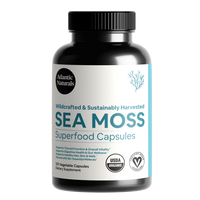
- Organic Sea Moss Capsules
- Sea Moss with Beet Root Capsules
- Sea Moss with Spirulina Capsules
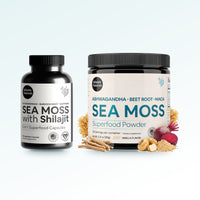
- Sea Moss with Shilajit 5-in-1 Capsules
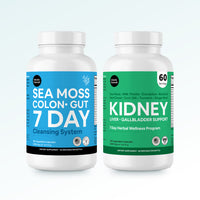
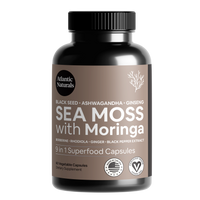
- Sea Moss with Moringa & Ashwagandha 9-in-1 Capsules
- Sea Moss Superfood Powder
- Sea Moss Super Greens Powder
- Sea Moss with Shrooms 6-in-1 Gummies
- Peptide Recovery Complex
- Sea Moss Hydration with Creatine (both flavors, tested separately)
Reading a COA at a glance
| Look for | Good sign | Red flag |
|---|---|---|
| Lot number | Matches your bottle | Missing, or one COA used for every batch |
| Lab | Named, independent | "In-house" or unnamed |
| Metals | Lead, arsenic, cadmium, mercury each with a number | "Passes" with no figures |
| Limits | USP 232 or Prop 65 referenced | No limit stated |
| Date | Recent, after batch date | Years old |
| Access | Published, or sent within a day of asking | "Available on request" that never arrives |
Frequently asked questions
Does sea moss contain heavy metals?
It can. Seaweed absorbs metals from the water it grows in, so sea moss from polluted water may carry arsenic, lead, cadmium, or mercury. Tested sea moss from clean water is well within safe limits. The issue is sourcing and testing, not sea moss itself.
What is a certificate of analysis?
A lab report on one specific batch of a product, showing what was tested, the result for each item, and the limit it was measured against. It should carry a lot number, a test date, and the lab's name.
What heavy-metal limits apply to supplements?
Most U.S. labs use USP General Chapter 232: 5 mcg per day for lead, 15 mcg for inorganic arsenic, 5 mcg for cadmium, 30 mcg for mercury. California Prop 65 sets a stricter 0.5 mcg daily warning level for lead.
Is Atlantic Naturals sea moss tested for heavy metals?
Yes. Every batch is tested by an independent lab for heavy metals and microbials before release, and the results are published by lot number on our Third Party Lab Results page.
What does ND mean on a lab report?
Not detected. The lab looked for it and found none above the method's detection limit. It's a pass.
See the reports: Third Party Lab Results. For the rest of what to check before buying, read Which Brand of Sea Moss Pills Is Best? and Sea Moss Side Effects. Our tested Organic Sea Moss Capsules are the place to start, or browse the full sea moss collection.
These statements have not been evaluated by the Food and Drug Administration. These products are not intended to diagnose, treat, cure, or prevent any disease.


Leave a Comment