

Flip a bottle of sea moss gummies over and read the back panel. Do that in the store or on the product page and you'll screen out most of the junk before it reaches your cabinet. A lot of what gets sold as "sea moss gummies" is closer to fruit snacks with a marketing story stapled on. The good ones are a genuinely easy way to keep a mineral-rich sea vegetable in your routine. Telling them apart takes about thirty seconds once you know where to look.
So: a buyer's guide from the person who reads the label so you don't have to. What the format can realistically do, what to check before you pay, the red flags that mean walk away, and how gummies compare with capsules and raw gel.
Why Gummies? The Case for the Chewable Format
The best supplement is the one you actually take. Obvious, maybe, but it's the whole ballgame. It separates the person who gets something out of a daily sea moss habit from the one who uses a bottle for a week and finds it half-full in a drawer six months later.
Gummies win on that metric for a few practical reasons:
- No water, no prep. You can take a gummy at your desk or on a walk. Sea moss gel needs the fridge and usually a smoothie to hide in.
- Taste. Raw sea moss is briny and oceanic, and plenty of people never come around to it. A decent gummy covers that up entirely.
- No pill fatigue. If you're already swallowing a few capsules a day, one more feels like a chore. A gummy feels like a small reward, which keeps the habit alive longer than willpower does.
- Friendlier if you hate swallowing pills. A lot of adults do, and gummies sidestep the problem.
The catch: a gummy has less room inside than a capsule, and it needs sweetener and texture agents to be edible. Not a dealbreaker. It just means the label does more of the work, which is why the next section is the long one.
What Sea Moss Actually Brings
Sea moss (Chondrus crispus and its close red-algae relatives, sometimes called Irish moss) is a nutrient-dense sea vegetable. Being a whole food, it pulls minerals out of the seawater it grows in. Iodine is the headline one. It also carries calcium, magnesium, potassium, and zinc, in amounts that shift with where and how it was harvested.
In structure/function terms, here's what a quality sea moss supplement typically supports:
- Thyroid support. Sea moss is a natural source of iodine, which your thyroid needs to make the hormones that help regulate metabolism and energy.
- Everyday energy. Trace minerals play supporting roles across hundreds of normal metabolic processes, and sea moss delivers them in whole-food form.
- Digestive comfort. It's rich in soluble fiber and carrageenan-family polysaccharides that act as gentle prebiotic fibers, helping support a healthy gut environment.
- Skin, hair, and nails. Its mineral profile, zinc and sulfur-containing compounds included, supports the normal structure of skin, hair, and nails.
- Immune support. Sea moss contributes nutrients that help support normal immune function as part of a balanced diet.
One thing worth saying plainly. You'll run into the claim that sea moss has "92 of the 102 minerals the body needs." That number is marketing folklore, not analytical chemistry. Sea moss is genuinely mineral-rich and doesn't need a made-up stat propping it up. Read that "92 minerals" line as a yellow flag about the brand, not a selling point.
How to Read a Sea Moss Gummy Label
The front of the bottle is built to make you feel something; the back panel tells you what you're getting. Check these in order.
1. Real Sea Moss Content Per Serving
The supplement facts panel should give a specific amount of sea moss per serving, in milligrams, tied to a named ingredient. Something like "Organic Sea Moss (Chondrus crispus)". If that number isn't there, or it's buried in a blend with no individual amounts, you can't tell whether you're getting a real dose or a token sprinkle for the label.
Check the serving size while you're there. A gummy that looks generous per serving but wants four a day is a very different deal from one that hits its dose in two.
2. Sugar Content
Every edible gummy has some sweetener in it. That's the format. The question is how much. Roughly 1 to 3 grams of sugar per serving is reasonable for a supplement gummy. Once you're seeing 5 or 6 grams and up, you've wandered into candy, and it adds up fast on a daily habit. Check both "Total Sugars" and "Added Sugars," and notice what the sweetener actually is (cane sugar, tapioca syrup, glucose syrup, or a sugar-free swap).
3. Pectin vs. Gelatin
The gelling agent decides whether the gummy is vegan. Gelatin comes from animal collagen. Cheaper to work with, and off the table for vegans, vegetarians, and many people with religious dietary restrictions. Pectin comes from fruit, is fully plant-based, and gives a cleaner bite without the rubbery chew. If a label says "gummy" but won't name the gelling agent, assume gelatin until it proves otherwise. A genuinely vegan gummy says so and lists pectin in the ingredients.
4. Added Functional Ingredients
Sea moss takes up little room in a gummy, so the better products pair it with something useful instead of packing in filler. Functional mushrooms are the usual, sensible partner. Lion's mane, reishi, cordyceps, chaga, and the like, all with long histories of traditional use. Same rule as the sea moss itself: every added ingredient named, its amount disclosed, and there for a real reason (a focus-and-energy formula, say) rather than to decorate the panel.
5. Third-Party Testing and Sourcing
Sea vegetables absorb whatever is in the water around them. That's the point, and it's also the risk. Good brands handle it two ways:
- Sourcing transparency: where the sea moss comes from, and whether it's certified organic. USDA Organic certification means documented handling standards, which most white-label gummy brands never bother with.
- Third-party testing: independent lab verification for identity, potency, and contaminants like heavy metals. Look for a stated testing policy, a certificate of analysis (COA) on request, or a lot-number lookup. A brand that tests will tell you. One that stays vague usually has a reason.
Red Flags: What a Weak Sea Moss Gummy Looks Like
Most low-quality products give themselves away fast. Walk when you see:
- Proprietary blends with no amounts. "Sea Moss Superfood Blend, 800 mg" spread across five ingredients tells you nothing. Blends are legal, and they're the standard trick for hiding a tiny dose of the expensive ingredient behind a big dose of the cheap one.
- Candy-level sugar. If there's more sugar than active ingredient, you bought confectionery with a health-food label on it.
- No species name. Sea moss should be identified as Chondrus crispus or whatever specific red algae was used. Vague sourcing tends to travel with vague everything.
- Disease claims. Anything promising to treat, cure, or prevent a medical condition is breaking FDA rules, and a brand willing to break labeling law isn't one I'd trust on manufacturing either.
- The "92 minerals" pitch. Recycled myth, covered above. Its presence tells you the copywriter mattered more than the formulator.
- Total silence on testing. No word on third-party testing, organic status, or manufacturing standards. That silence is itself an answer.
Gummies vs. Capsules vs. Gel: An Honest Comparison
There's no single best format, only a best one for your routine. Worth being honest about the trade-offs.
Gummies
Best for: people who struggle to stay consistent, hate pills, or want a formula that pairs sea moss with something like functional mushrooms. Trade-offs: less capacity per piece than a capsule, some sugar you can't avoid, and formula quality that swings wildly from brand to brand.
Capsules
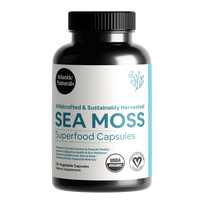
Best for: people who want the most sea moss per serving with no sugar and no taste. A clean capsule like our Organic Vegan Sea Moss Capsules is the most efficient way to take it: dried, milled sea moss, nothing else in the way. Trade-offs: you have to be fine swallowing pills, and there's no enjoyment built in to keep you coming back.
Gel
Best for: traditionalists and smoothie people who want sea moss in its most whole-food form and like cooking it into things. Trade-offs: it needs refrigeration, doesn't last long once opened, tastes distinctly of the ocean, and travels worst by a mile. Dosing is looser than a standardized gummy or capsule too.
A quick way to decide. If you've ever quit a supplement because taking it was annoying, get gummies. If you care most about potency per serving and a short ingredient list, get capsules. If sea moss is going in the blender anyway, gel makes sense. Plenty of our customers keep capsules at home and stash gummies in a bag or a desk drawer. You can put every format side by side in our sea moss collection.
Sea Moss + Functional Mushrooms for Focus and Clarity
The more interesting thing happening in the gummy category is the pairing of sea moss with functional mushrooms. Two traditions, one from the ocean and one from the forest, that sit well together in a daily formula.
- Lion's mane is the one people reach for on the cognitive side, traditionally used to support focus, mental clarity, and healthy cognitive function.
- Reishi has centuries behind it as a calming adaptogen, taken to support a balanced stress response and a steadier feeling through the day.
- Cordyceps is the stamina mushroom, traditionally used to support endurance, oxygen use, and physical vitality.
Set that on sea moss's mineral foundation, iodine and thyroid support included, and the combination is built around one goal: showing up sharper and steadier without reaching for a third coffee.
That's the thinking behind our Sea Moss with Shrooms 6-in-1 Gummy. USDA Organic sea moss with a blend of functional mushrooms, in a vegan, pectin-based gummy. Every ingredient named, the formula built for focus, clarity, and daily energy, no gelatin, no proprietary-blend hide-and-seek. The gummy that passes its own buying guide.
So Where Does That Leave You
A sea moss gummy is a legitimate, low-effort way to keep a mineral-rich sea vegetable in your day, as long as it was built like a supplement and not a snack. Check the real sea moss content per serving. Keep sugar in that 1-to-3-gram range. Hold out for pectin if you want vegan. Favor formulas where every added ingredient is named and doing a job. And buy from brands that can show you organic certification and third-party testing. Do those five things and the format's one big advantage, the fact that you'll take it every single day, finally gets to matter.
Frequently Asked Questions
Are sea moss gummies as effective as capsules?
Both deliver sea moss; the difference is capacity and consistency. Capsules typically hold more sea moss per piece with no sugar, while gummies hold less per piece but are easier to take consistently and can pair sea moss with complementary ingredients. Compare the milligrams of sea moss per serving on each label rather than assuming one format wins by default.
How many sea moss gummies should I take per day?
Follow the serving size on the specific product's label, since sea moss content per gummy varies widely between brands. Do not exceed the labeled serving — sea moss is a natural source of iodine, and more is not better. If you have a thyroid condition or take medication, talk with your healthcare provider before starting any sea moss supplement.
Are sea moss gummies vegan?
Only if they are made with pectin rather than gelatin. Gelatin is animal-derived, and plenty of gummies on the market use it because it is cheaper. Check the ingredient list for pectin and look for an explicit vegan callout. Atlantic Naturals gummies are pectin-based and fully vegan.
Why combine sea moss with mushrooms like lion's mane?
They cover complementary ground. Sea moss contributes whole-food minerals, including iodine to support normal thyroid function, while functional mushrooms such as lion's mane, reishi, and cordyceps are traditionally used to support focus, a balanced stress response, and stamina. Together they make a single daily gummy that supports mental clarity and everyday energy.
How long does it take to notice anything from sea moss gummies?
Supplements support normal body processes; they are not fast-acting stimulants. Most people should think in terms of consistent daily use over weeks, alongside a reasonable diet and sleep, rather than expecting a same-day effect. Consistency is the entire reason to choose the gummy format in the first place.
These statements have not been evaluated by the Food and Drug Administration. This product is not intended to diagnose, treat, cure, or prevent any disease.


Leave a Comment