


Last updated: May 2026
Quick Answer
Sea moss may support normal thyroid function because it contains iodine, which the thyroid needs to produce hormones. However, there is currently no strong scientific evidence proving that sea moss treats thyroid disease, hypothyroidism, or Hashimoto’s disease. In some people, especially those with thyroid disorders, too much iodine from sea moss may actually worsen thyroid problems.
Sea moss has become one of the most talked-about wellness supplements online. Supporters claim it can boost energy, improve metabolism, support weight loss, and even “heal” thyroid problems naturally.
Many of these claims come from sea moss’s nutrient content and its broader wellness reputation. You can also explore the evidence-backed health benefits and side effects of sea moss in our detailed guide.
So, is sea moss actually good for your thyroid, or could it potentially do more harm than good? Here’s what current research says about this:
What Is Sea Moss?
Sea moss — also commonly called Irish moss — is a type of red seaweed commonly harvested from the Atlantic Ocean and Caribbean waters.
It naturally contains:
- Iodine
- Magnesium
- Potassium
- Calcium
- Iron
- Small amounts of zinc and selenium
- Fiber and antioxidant compounds
Most claims about sea moss and thyroid health are linked to its iodine content.
Read our detailed guides on: what minerals are in sea moss and what vitamins are in sea moss.
Why Iodine Is Important for Thyroid Health
Your thyroid gland needs iodine to produce thyroid hormones:
- T3 (triiodothyronine)
- T4 (thyroxine)
These hormones help regulate:
- Metabolism
- Energy levels
- Heart rate
- Body temperature
- Growth and development
Without enough iodine, the thyroid cannot produce adequate hormones. Severe iodine deficiency may contribute to hypothyroidism and goiter.
Simply put, both iodine deficiency and excessive iodine intake can affect thyroid function, which is why balance matters more than simply getting “more” iodine.
Does Sea Moss Help Thyroid Health?
The Science Is Still Limited
Despite the popularity of sea moss supplements, there are currently no large human clinical trials proving that sea moss improves thyroid disease outcomes.
Most claims are based on one scientifically true point:
Sea moss contains iodine, and iodine helps the thyroid produce hormones.
However, that does not automatically mean sea moss can treat thyroid disease.
Current evidence mainly supports iodine’s role in thyroid hormone production — not sea moss itself as a proven thyroid therapy.
Can Sea Moss Help Thyroid Function?
Possibly — but mainly in people with low iodine intake.
Your body cannot produce iodine on its own, so it must come from food or supplements.
Most people already get enough iodine through their regular diet, especially from foods like dairy products, seafood, and iodized salt.
For people with low iodine intake, sea moss may provide an additional natural source of iodine.
Sea moss may help support normal thyroid hormone production if someone:
- Does not get enough iodine from food
- Has mild iodine deficiency
- Does not already have thyroid disease
- Has low intake of seafood or iodized salt
In those situations, additional iodine may help the thyroid function properly.
Can Too Much Sea Moss Harm the Thyroid?
Yes, and this is one of the biggest concerns experts raise.
Sea moss naturally contains iodine, an essential mineral your thyroid needs to produce hormones — but balance is important because too little or too much iodine can both affect thyroid health.
The American Thyroid Association also advises caution with supplements providing more than 500 mcg of iodine daily.
According to the National Institutes of Health (NIH):
- Recommended dietary allowance (RDA) of iodine for adults is: 150 mcg/day
- Upper limit: 1,100 mcg/day
What Thyroid Problems Can Too Much Iodine Cause?
Excessive iodine intake may contribute to:
- Hyperthyroidism
- Hypothyroidism
- Thyroid inflammation
- Autoimmune thyroid dysfunction
- Goiter
A case report by the National Institute of Health (NIH) suggests that high-iodine Irish sea moss supplements may worsen underlying thyroid conditions like Graves’ disease and trigger hyperthyroidism in susceptible individuals.
Who Should Be Careful With Sea Moss?
Talk to a Healthcare Professional Before Using Sea Moss If You:
- Have Hashimoto’s disease
- Have Graves’ disease
- Take thyroid medication
- Have thyroid nodules
- Have hyperthyroidism
- Have hypothyroidism
- Are pregnant or breastfeeding
- Already take iodine supplements
People taking thyroid medication should be especially careful because excessive iodine intake may affect thyroid hormone balance.
Sea Moss vs Iodine Supplements for Thyroid Health
|
Factor |
Sea Moss |
Standard Iodine Supplements |
|
Iodine content |
Often inconsistent |
Usually standardized |
|
Research support |
Limited |
Better studied |
|
Contamination risk |
Possible heavy metals |
Lower in regulated products |
|
Dosing accuracy |
Difficult to predict |
More predictable |
|
Thyroid safety |
Depends on product and dose |
Easier to monitor medically |
One of the biggest problems with sea moss supplements is that iodine levels can vary dramatically depending on:
- Harvest location
- Water quality
- Processing methods
- Species of seaweed
Heavy Metal Concerns With Sea Moss
Sea moss may also absorb contaminants from surrounding water.
Some seaweed products have been found to contain:
- Arsenic
- Mercury
- Lead
- Cadmium
This is one reason many experts recommend avoiding excessive or long-term use without medical guidance.
Because quality can vary widely between brands, choosing reputable manufacturers that test for purity and contaminants is important.
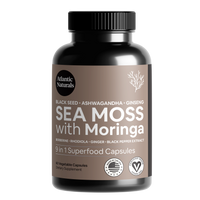
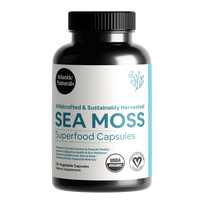
Atlantic Naturals offers organic Irish sea moss supplements made in the USA using high-quality wildcrafted sea moss. Their products are third-party tested and made without unnecessary fillers or artificial additives.
The supplements are produced in GMP-certified facilities, and each batch is tested for purity and heavy metals to help ensure quality and consistency.
You can read our guide on how to spot fake vs real sea moss.
What the Science Actually Supports
Here is what current evidence does — and does not — support.
|
Claim |
Supported by Science? |
|
Sea moss contains iodine |
Yes |
|
Iodine supports thyroid hormone production |
Yes |
|
Sea moss may help iodine deficiency |
Possibly |
|
Sea moss cures hypothyroidism |
No strong evidence |
|
Sea moss reverses Hashimoto’s disease |
No evidence |
|
Sea moss replaces thyroid medication |
No |
|
Too much sea moss may affect thyroid health |
Yes |
Should You Take Sea Moss Daily?
There is no universally agreed-upon daily dosage for sea moss supplements.
Because iodine levels vary widely between products, taking large amounts daily may increase the risk of excessive iodine intake over time.
If you choose to use sea moss:
- Use reputable brands
- Avoid extremely high doses
- Do not combine multiple iodine supplements
- Monitor for symptoms like palpitations, anxiety, unexplained weight changes, or worsening thyroid symptoms
You should talk with your healthcare provider (especially if you have a thyroid disease) before starting sea moss supplement.
Explore our detailed guide on whether it is safe to take sea moss daily.
Key Takeaways
Sea moss is not a miracle thyroid cure — but it is not completely useless either.
Its primary thyroid-related benefit comes from iodine, an essential nutrient the thyroid needs to make hormones. However, more iodine is not always better.
For many Americans who already get enough iodine from food, taking large amounts of sea moss may offer little benefit and could potentially worsen certain thyroid conditions.
Current research does not show that sea moss cures hypothyroidism, reverses Hashimoto’s disease, or replaces thyroid medication.
If you have a thyroid condition or take thyroid medication, it is safest to speak with a healthcare professional before using sea moss regularly.
Disclaimer: This article is for general informational purposes only and does not constitute medical advice.


Leave a Comment